The house made of tin
Day 3 Pictures
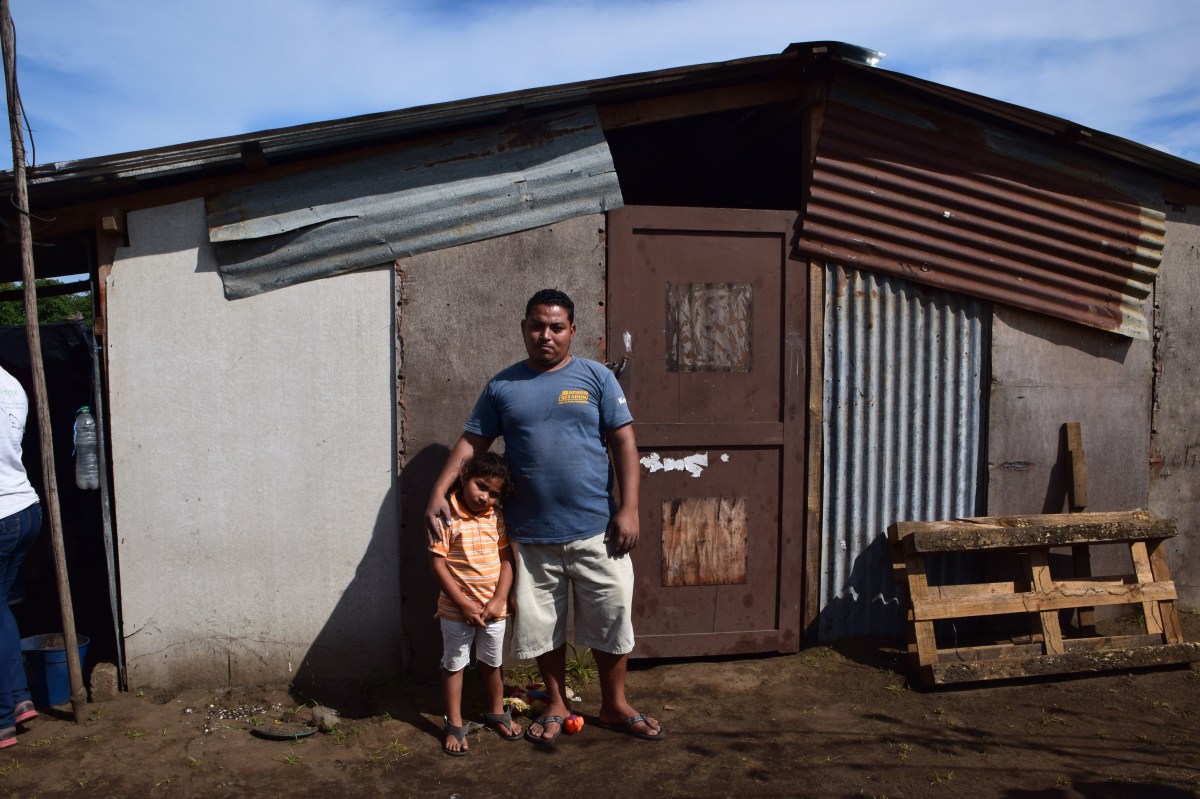
The house made of tin
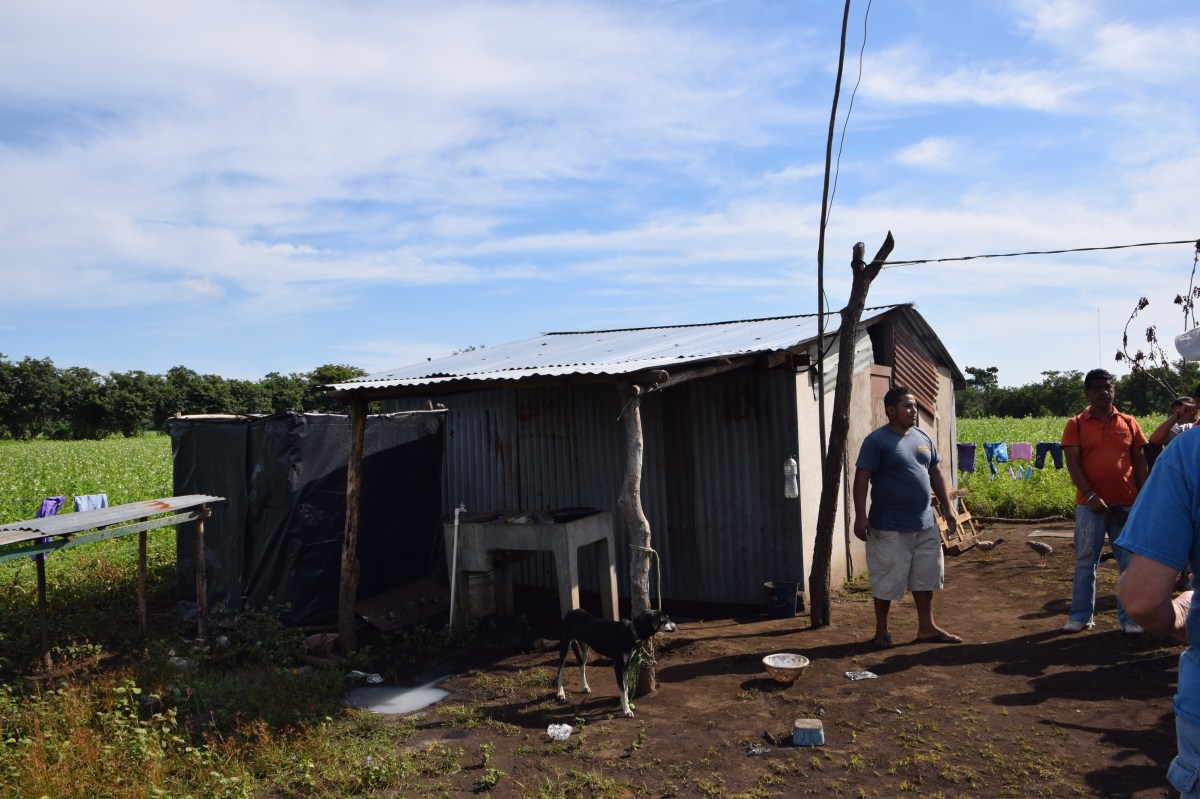
After a full day of activity and touring, I sit on the veranda of the Peace House, with dirt under my nails and several layers of dust covering my face, arms and legs…and I feel lucky and sad at the same time. I am absolutely humbled by what I have seen today.
Never before have I experienced poverty this extreme first hand. I’ve seen pictures in National Geographic and brochures, but never up close and personal. Until today.
We visited one man who is desperately awaiting donations that are needed to build a new home for his family. He has been approved to receive a new home, based on his extreme need, but futher donations are needed before his home can be built. He currently lives in a tin home that he built on land that was given to him by his mother. As one can imagine, living in a tin house – literally tin walls and a tin roof – in the Nicaragua heat is beyond imagination.
He does have water, however, there is only one latrine for the entire “neighborhood,” which consists of about 5 neighboring similar dwellings. His family has to walk across the road to get to the latrine. Just Hope helps people like this man find hope that he can improve his living conditions by providing housing that is safe, adequate and dignified.
When we asked him about his combined income with his wife, his family lives on approximately $34 per week. I immediately thought about how we at home will spend $34 on a pizza dinner, when this family must make that $34 last for the rest of the week. After bus fare, make that $24. Humbling.
We toured a water distribution facility, which consisted of 6 large tanks sitting on top of a hill, with 20 solar panels that keep power costs down. Before this water distribution project existed, which is only in the past 10 years, people had to get water from their own individual wells. There were thousands of wells in the area, and when tested for water purity, 90% of the wells were toxic. People on these properties were constantly sick. The need for a quality water distribution program was clear. Just Hope and other organizations partnered with the government of austria to provide water for a community of 8000 people.
We then visited a farmer who was able to participate in Just Hope’s Agricultural Emergency Relief Program. Hairo is a farmer who grows corn, and has a beautiful, healthy crop. He was able to pay for planting his crop on one of his 7.5 acres due to a grant from the program in which he will pay back 1/2 of what he received. The amount he pays back will help create a Micro Credit program which will help other farmers achieve the same success.
Hairo also told us that his whole community had no water because of a broken water pump. They have been without water for two weeks, and a repair will not be until they can pay the cost of $7,000. The 10 families in his community committed to give $10 toward the cost (which is VERY difficult for these families). The rest of the cost must come from donations. They can’t come soon enough…imagine not having anything but rainwater to live off of in your household!
That was pretty heavy stuff. After lunch, we did hear some uplifting stories. We visited a couple of homes of women who have received loans from the Micro Credit program to have a business at their home. One woman raises chickens, another raises pigs for market; and another woman raises hogs for breeding. All have been sucessful in their businesses, and were so grateful for the opportunity, as their success has improved the quality of their lives.
It was nice to end the day on a good note. The earlier feeling of desperation was pervasive, and impacted all of us who visited these homes. The successes that we saw at the end of the day illustrated that there IS hope. Organizations such as Just Hope understand the dire needs of the people of Chacraseca, and are finding ways to help families and businesses rise above poverty.
A final personal note…while many of these families live in such conditions, the people are still smiling and loving to others. At Hairo’s farm, while down in his corn field, I looked up the hill and saw his two daughters spying on us from behind a patch of trees. When they timidly came out of hiding, I asked her name. Her name was Erika and her little sister was Frances. They let me take their pictures and then giggled when I showed them their pictures on my camera. I even took a selfie with them! On the way down the hill back to the house, Erika gave me a pink flower and said “Tuyo.” That flower was for me! I put the flower behind my ear and we walked back to her house together…mi amiga Erika y yo.
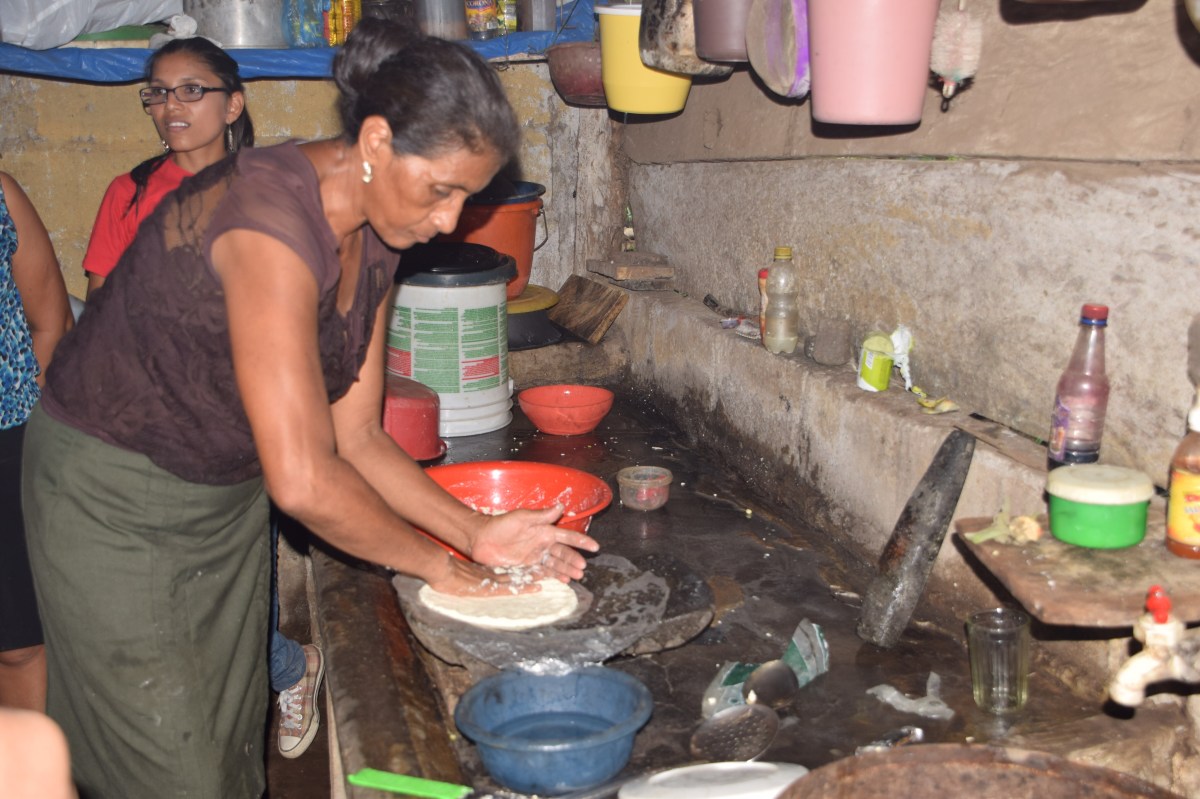
Our cooking lesson continued

We had a cooking lesson after lunch
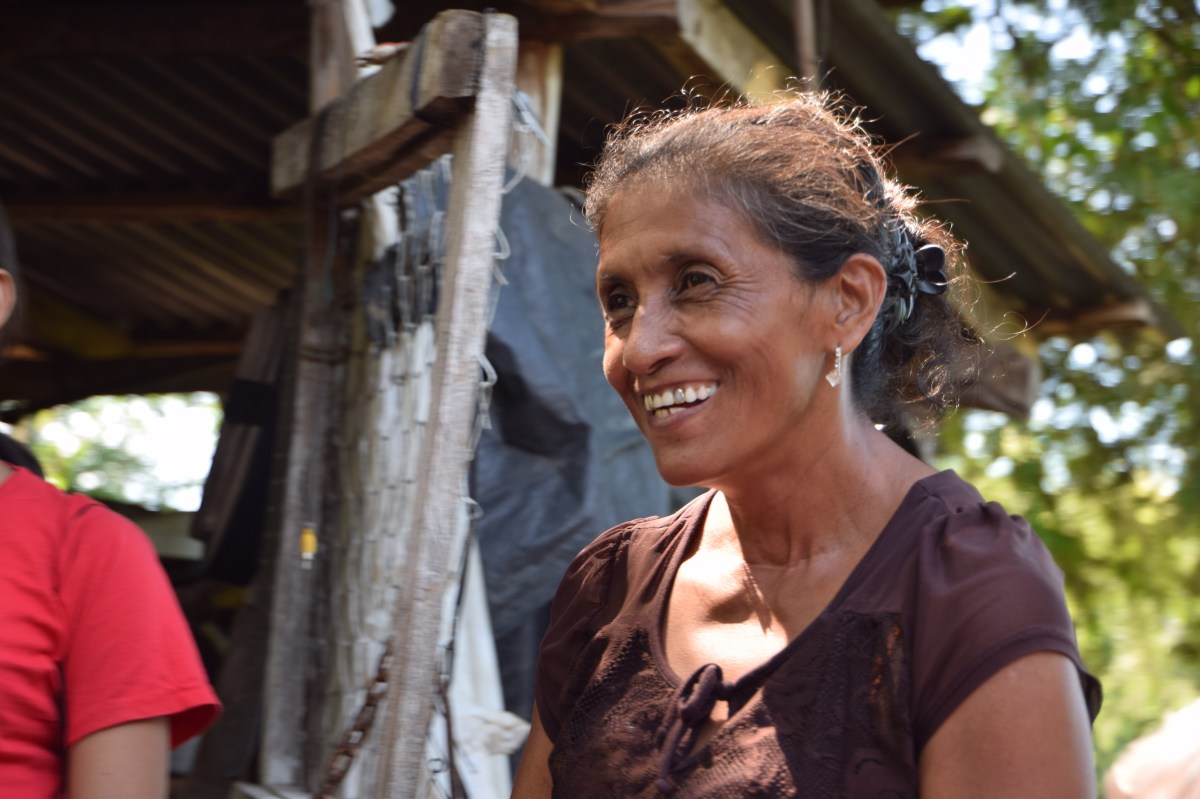
Bertha prepared us a wonderful meal at her home.

San Juan Cathedral
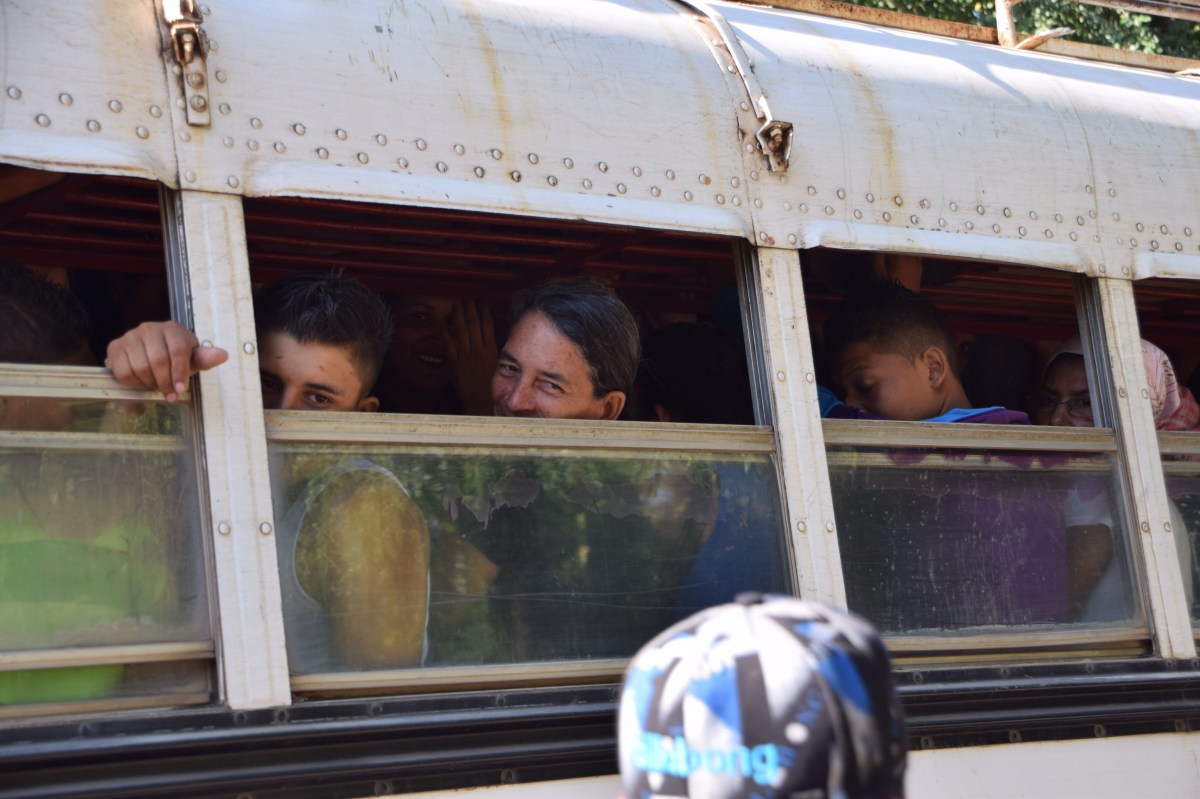
Overcrowded “Chicken Bus”

**A quick note to all…we have very little internet access here, so my posts may not be as frequent as I had hoped. But I will do my best to share as much as possible with you all! Also, I am having difficulty posting more than one photo at a time, which is frustrating.
A Feast for the Eyes:
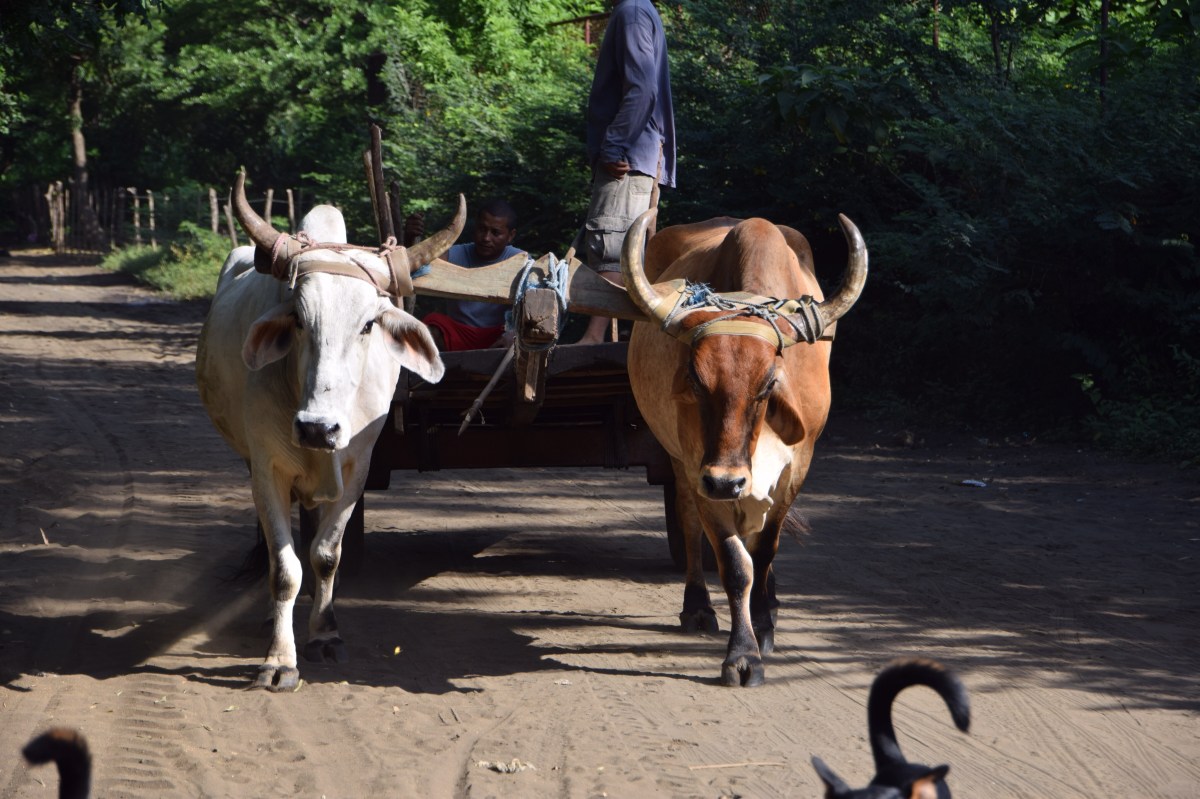
Today, we were up early to take part in a full day that the women of Stitching Hope planned for us. While we waited for the bus to pick us up on the road, we saw all kinds of Nicaraguan life going on around us. Motorcycles, horse drawn carts, women carrying large containers on their heads, young men playing soccer on a dirt field, and two massive oxen pulling a wagon, to name a few.
When the bus arrived, it was packed like sardines! It looked impossible to fit one more body into the bus, but several of our group (led by fearless Brenda Grauer), decided to go for it and cram into the overcrowded bus (Brenda counted 110 people. No one objected…people were patient and squished closer together to make room for more bodies. The rest of us boarded our private bus and followed the first bus into Leon. Those that braved the crowded bus reported that there were indeed chickens in some people’s laps, market
products, pinatas and who knows what else!
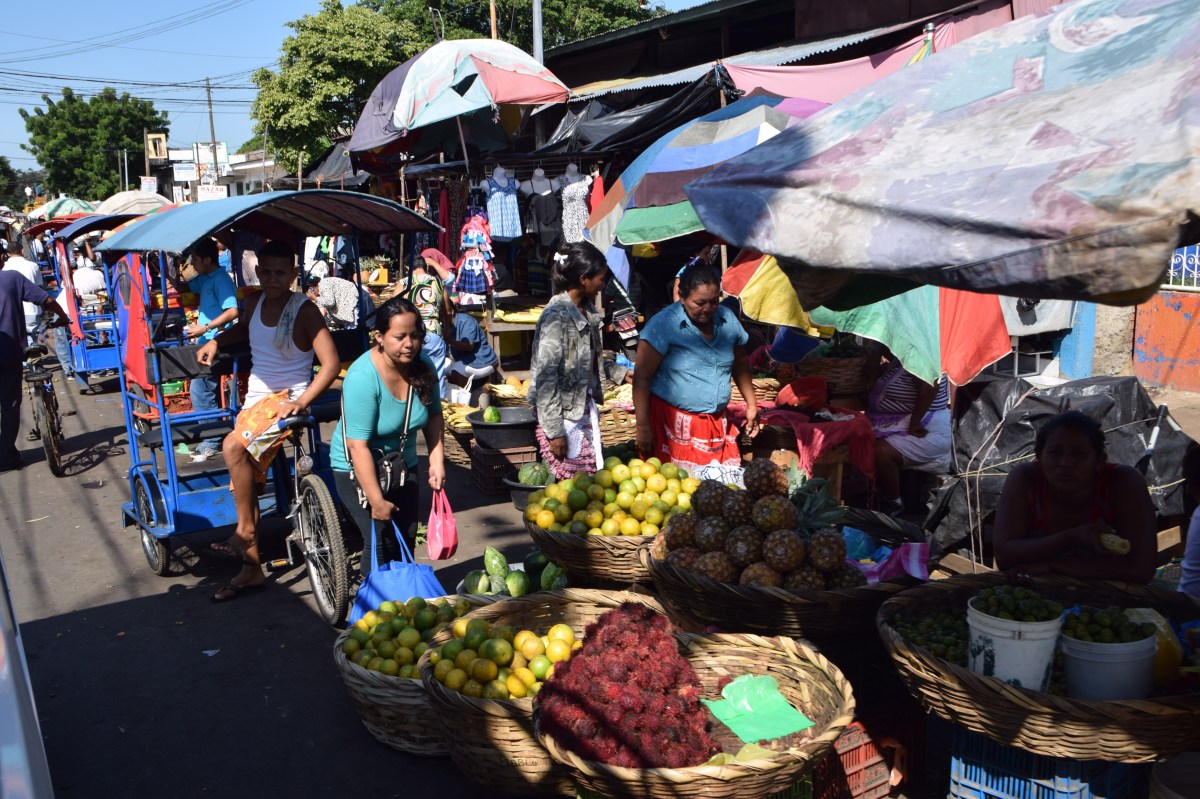
When we entered Leon, the street burst into a million colors and faces. Vendors lined the street selling everything under the sun. Friendly waves and smiles greeted us as we drove slowly through the street absorbing the experience.
We got out to walk among the vendors and meander through their market. It reminded me of the West Side Market, but without refrigeration in many of the booths. We really stepped up our pace when we walked by the stinky fish booth! We had a brief tour of San Juan Cathedral – the only building that wasn’t destroyed by the 1972 earthquake. From there, we all squeezed onto another crowded bus to another feast – a magnificent meal served at the home of Bertha, one of the women from Stitching Hope. A long, bumpy road delivered us to her home, where she had prepared a wonderful lunch for all of us. She then gave us a hands on lesson on how to make Werela tortillas. After shucking the corn, they taught us how to strip the corn from the cob, grind the corn and make it into a dough, then cooked the tortillas and served them up to all.
It didn’t end there, we shared our reflections about the differences in our cultures, and the women shared with us more about what their lives are like on a day to day basis. The strength and work ethic of these women are amazing…and inspirational.
Next, we headed down the hill to take part in the Baptism celebration for Bertha’s grandson, Jefferson. Two pinatas thrilled the children as they tried to be the first to release the candy. MORE food was served as we watched the festivities.
We returned to the Peace House, tired, dusty, happy and well fed! We were all desperate for a shower…and I must say that a cold shower has never felt so good!!
Today was a day of feasts – a feast of the senses with the vibrance, smiles and music of the marketplace; and the best feast of all…a meal that was prepared in our honor at the home of Bertha. Our bellies were full, and our souls were touched by the women who planned and shared this day with us.
 Carolyn's Chronicles